
Hotel guestroom casegoods: what to specify before you request quotes
Bedside tables, desks, dressers, TV units, luggage racks and minibar cabinets, made to your drawings. Fix the board, the finish, the hardware and the formaldehyde rule in the specification, and quotations can be compared like-for-like.
Casegoods made to your drawings, by the factories that make them
Casegoods are the panel and timber pieces of the guestroom. They come from casegoods factories, not from the seating or upholstery factories, and they are made to your drawings: the factory prepares shop drawings and a material list, and you sign off drawings, veneer or laminate and finish before production.
Two casegoods quotations can only be compared when they price the same thing. This page sets out what to fix before you ask for prices — the core board, the surface, the hardware and the formaldehyde rule — and the evidence to ask any supplier for.
What we source
- Bedside tables
- Desks, dressers and TV units
- Luggage racks and minibar cabinets
- Mirrors
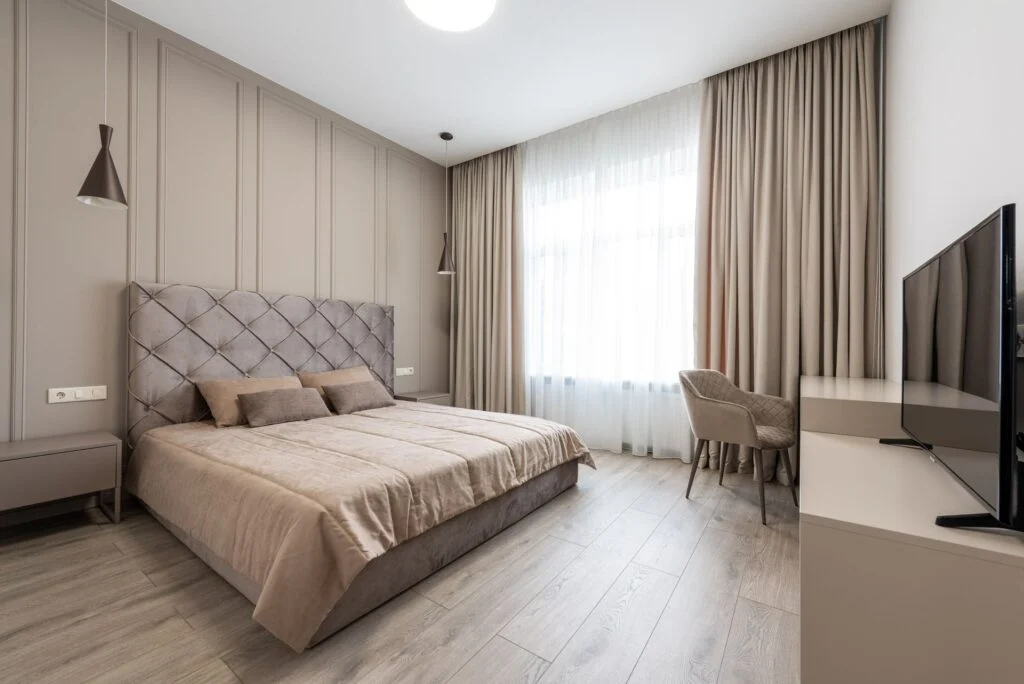
Four things to fix before you request quotes
The board, the surface, the hardware and the formaldehyde rule for your market.
01
01 · Board and core
The first line of a casegoods specification is the core: which board or timber goes into which part, and how thick. If the specification leaves the core open, each factory fills the gap its own way, and the quotations are no longer like-for-like.
- Core material per part: carcass, doors and drawer fronts, tops, backs and drawer boxes — for example particleboard, MDF, plywood or solid timber
- Board thickness per part
- Solid timber species, where solid timber is specified
- The formaldehyde requirement and the standard it refers to (see 04 below)
The core material and thickness are written on the shop drawing and material list you sign off before production.
02
02 · Veneer, laminate and finish
Veneer or laminate and the finish are signed off on a sample before production, and that sample becomes the reference for bulk production and for the inspection before shipment.
- Veneer species and cut, or the laminate (HPL or melamine-faced board) and its decor reference
- Finish on veneer or timber: colour and sheen, matched to the approved sample
- Edges: edge banding material and thickness, or solid timber lipping
- Surfaces that take wear, such as desk and dresser tops: the material your design calls for
Tell us which finish samples you already hold; for large orders we courier samples and finish swatches to you for approval before production.
03
03 · Hardware and built-in parts
Hardware is part of the specification, not a factory default. Name the type and finish of every hinge, runner and handle, and the brand if your specification nominates one.
- Hinges and drawer runners: type (for example soft-close or full-extension) and brand, if nominated
- Handles and pulls: model and finish
- Locks, where your design has lockable drawers or minibar cabinets
- Built-in power or lighting in desks and bedside tables: the certification your market asks for
Our own QC team checks hardware against the signed-off specification at the inspection before shipment.
04
04 · Formaldehyde, by market
Formaldehyde limits are set by the market the furniture goes to, and each rule sets its own test method or test conditions. A class name on a quotation — E1, E0 or ENF — does not by itself show that a panel meets another market’s rule, so the specification should name the rule, not only the class.
- United States — TSCA Title VI (40 CFR 770.10): 0.05 ppm for hardwood plywood, 0.11 ppm for MDF, 0.13 ppm for thin MDF, 0.09 ppm for particleboard, based on ASTM E1333-14; the limits apply to panels, component parts and panels incorporated into finished goods
- Australia and New Zealand — tell us the class your specification names and the standard it refers to
- European Union — REACH Annex XVII, entry 77 (Regulation (EU) 2023/1464): after 6 August 2026, furniture and wood-based articles must not release more than 0.062 mg/m³ of formaldehyde under the test conditions in Appendix 14
- China — GB 18580-2025, in force since 1 June 2026: wood-based panels E1 (≤0.124 mg/m³) and wood-based panel products E0; GB/T 39600-2021 grades E0 (≤0.050 mg/m³) and ENF (≤0.025 mg/m³)
- Other markets — tell us the class your specification names and the standard it refers to
As of September 2026. Requirements differ by product and jurisdiction, and your specifier or certifier decides what applies to your project; we confirm what the factory holds before we quote.
What to ask any casegoods supplier for
- The core material and thickness of each part, written on the shop drawing or material list
- For the United States: the TSCA Title VI panel label (panel producer, lot number, TSCA Title VI third-party certifier number) and the fabricator label on each finished good or carton — fabricator name, month and year of production, and a statement that the goods are TSCA Title VI compliant
- For the European Union: a formaldehyde test report for the furniture supplied, tested under the conditions of Appendix 14 to REACH Annex XVII entry 77
- For any class quoted as E1, E0 or ENF: the standard and edition it refers to, the test method, the name of the testing laboratory and the date of the report
- The approved finish sample and the veneer or laminate reference, kept as the production reference
- A hardware list with model and finish for each item
These are examples, not a complete list. Tell us where your project is and what your specification calls for, and we confirm what the factory holds before we quote.
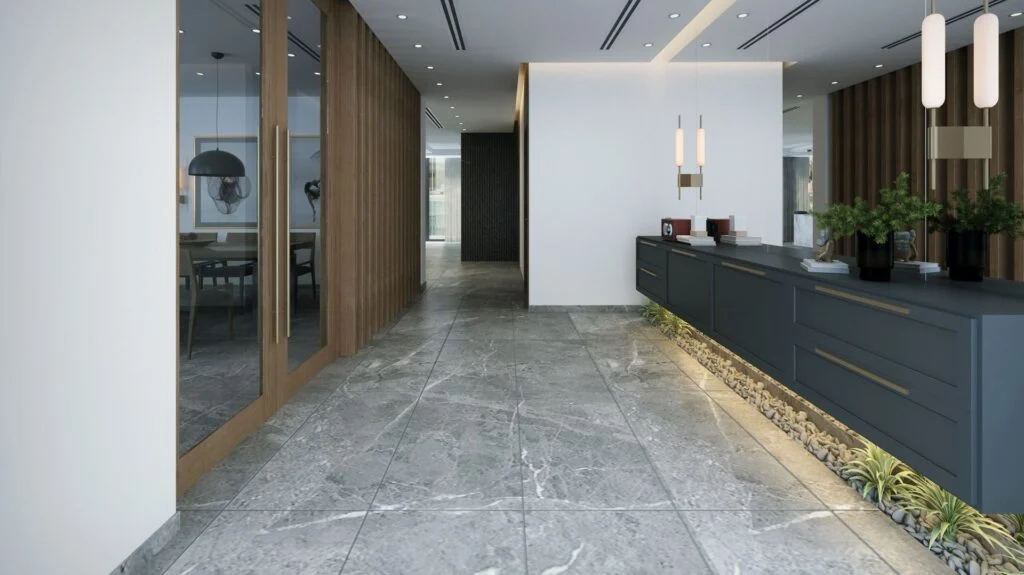
From signed-off drawings to loaded containers
Shop drawings and material list
For custom pieces the factory prepares shop drawings and a detailed material list, going back and forth with you until you sign off. Nothing goes into production until you have signed them off.
Samples for approval
For large orders, samples are couriered to you for approval before production, together with finish swatches. The approved sample becomes the production reference.
One inspection before shipment
When production is finished, our own QC team checks quantities, dimensions, finish, hardware and packing against the signed-off specification and sends you a report with photos and video.
Guestroom casegoods: questions clients ask
What counts as casegoods in a hotel guestroom?
The panel and timber pieces around the bed: bedside tables, desks, dressers and TV units, luggage racks and minibar cabinets, and mirrors. In a guestroom package we handle wardrobes, headboard walls, minibar units and vanities built into the room as fixed joinery, and beds, headboards and seating come from other factories. Seating, casegoods, upholstery, metal frames and fixed joinery come from different factories, and we use each one only for what its line actually makes.
Are guestroom casegoods made to our drawings?
Yes. For custom pieces the factory prepares shop drawings and a detailed material list, going back and forth with you until you sign off drawings, veneer or laminate and finish. Nothing goes into production until you have signed them off.
Which formaldehyde limits apply to casegoods going to the United States?
TSCA Title VI. Under 40 CFR 770.10 the emission standards are 0.05 ppm for hardwood plywood, 0.11 ppm for MDF, 0.13 ppm for thin MDF and 0.09 ppm for particleboard, based on test method ASTM E1333-14, whether the composite wood is a panel, a component part or part of a finished good. Under 40 CFR 770.45 fabricators must label every finished good, or every box or bundle of finished goods, with the fabricator’s name, the month and year of production and a statement that the goods are TSCA Title VI compliant.
What is the EU formaldehyde limit for hotel furniture?
Entry 77 of REACH Annex XVII, added by Regulation (EU) 2023/1464: after 6 August 2026, furniture and wood-based articles must not be placed on the market if the formaldehyde released under the test conditions in Appendix 14 exceeds 0.062 mg/m³. We ask the factory for a test report under those conditions for the furniture being supplied.
A factory has quoted E0 board. Is that enough?
Not on its own. E0 and ENF are grades in the Chinese standard GB/T 39600-2021 (E0 ≤0.050 mg/m³, ENF ≤0.025 mg/m³), and E1 is a class in GB 18580-2025. A grade shows what the board was tested to under that standard; on its own it does not show TSCA Title VI certification or compliance with the EU limit. Ask which standard and edition the grade refers to, the test method, the laboratory and the report date, and check that against the rule for your market.
Who inspects the casegoods before shipment?
Our own QC team, when production is finished and before shipment: quantities, dimensions, finish, hardware and packing are checked against the signed-off specification, and you receive a QC report with photos and video. Any item that does not meet the agreed standards is recorded in the inspection report. Your own project team is welcome to attend the inspection with us.
What is the minimum order?
A full container. Casegoods can share containers with the seating and fixed joinery of the same project: we consolidate goods from several factories into full containers. We do not ship loose cargo.
To get a quotation, send us
- An FF&E schedule or product list, room by room, with quantities — plus drawings for any custom pieces
- The specification or a reference photo or link for each item: dimensions, materials, fabric and finish
- Your fabric and finish selections, or ask us to propose them; tell us if fabric is supplied by you (COM)
- Where your project is, so we check the standards your market requires
What the quotation shows. Per line: item, specification, materials, fabric and finish, dimensions, unit price, quantity, packing and lead time — like-for-like against your spec, any substitution flagged.
Where to look next
The whole guestroom package, part by part: bed and headboard, casegoods, seating and fixed joinery.
The standards our main markets ask contract furniture to meet, and the evidence to request from any supplier.
How we price your FF&E schedule line by line and bring several factories back together into one loading.
Have a guestroom schedule to price?
Send the schedule and drawings, and our team will price the casegoods line by line against your specification and the rules of your market.